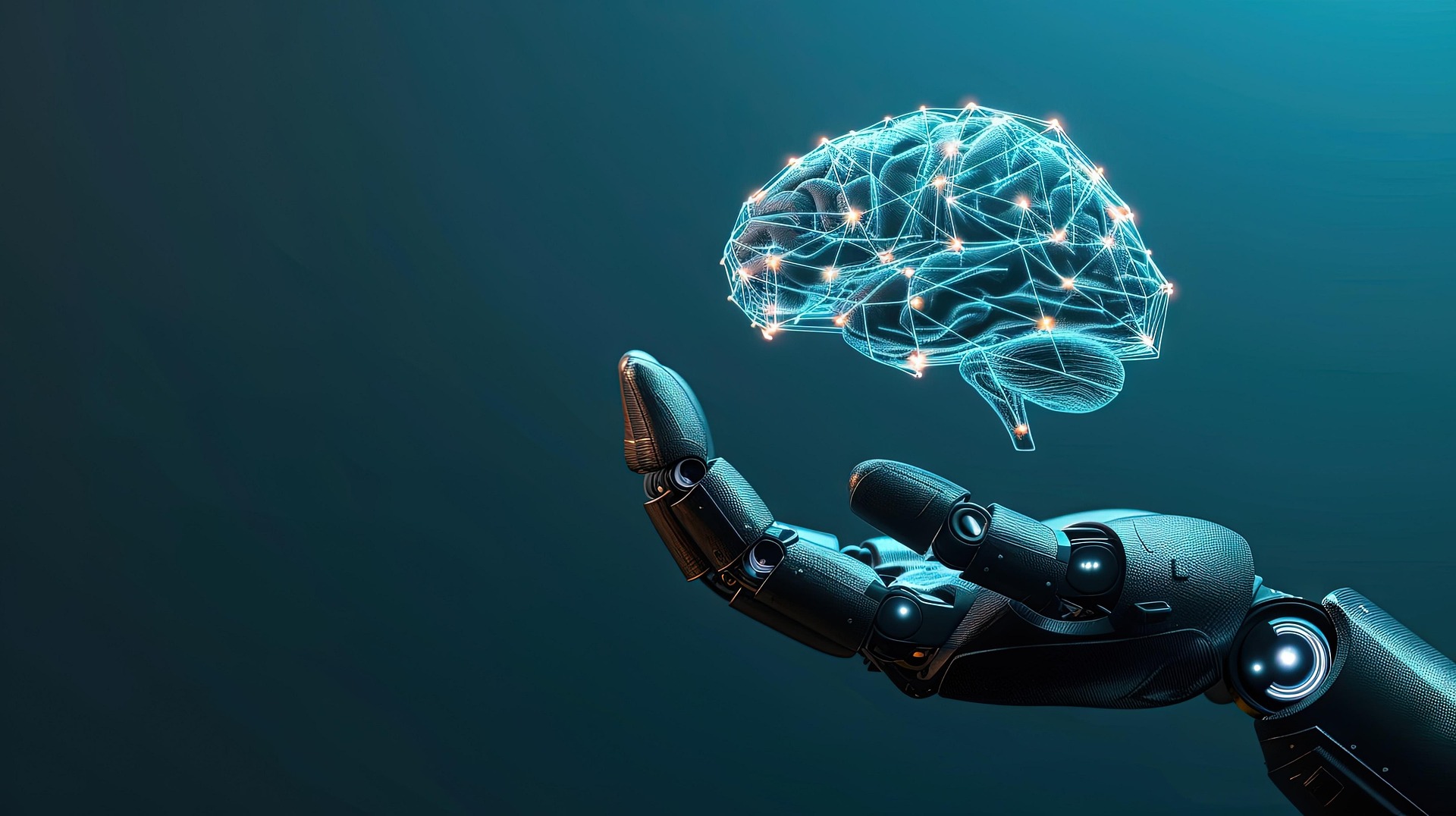
From Life to Artificial Agents: How Do We “Mathematise” Agency?
What makes a system truly “alive” or, more broadly, an agent capable of acting in the world? Why do some entities appear to have their own identity, pursue goals, and shape their environment, while others do not?
In this talk, Dr Manuel Baltieri, Chief Scientist at Araya (Tokyo), offers an accessible (yet rigorous) journey into one of the most fascinating challenges in contemporary science: giving a mathematical form to the idea of agency — that is, a system’s capacity to behave as if it were guided by purposes.
Starting from the classic question “what is life?”, Dr Baltieri explains why, while Darwinian evolution has been successfully abstracted and mathematically modelled, the notion of a self-maintaining system has proven far harder to formalise. His proposal is to shift the focus to a more general framework: agents as goal-directed systems that sustain an identity, regulate themselves according to norms/objectives, and interact with the environment in an asymmetric way.
At the core of the talk is a comparative “map” of the main formal approaches discussed in the literature today—including the free energy principle, integrated information theory, and dynamical-systems perspectives—highlighting their strengths, limitations, and potential synergies toward a unified account of agency across both natural and artificial domains.
The event is organised within the EDA-Robots project, funded by PNRR Young Researchers MSCA 2024, coordinated by Federico Da Rold and IULM University.