Tourism Beyond 2030: Rethinking Growth, Sustainability, and the Relationship with Local Communities
What challenges lie ahead for tourism after 2030? Professor Anna Scuttari’s reflections on sustainability, climate change, local communities, and new models of tourism development.
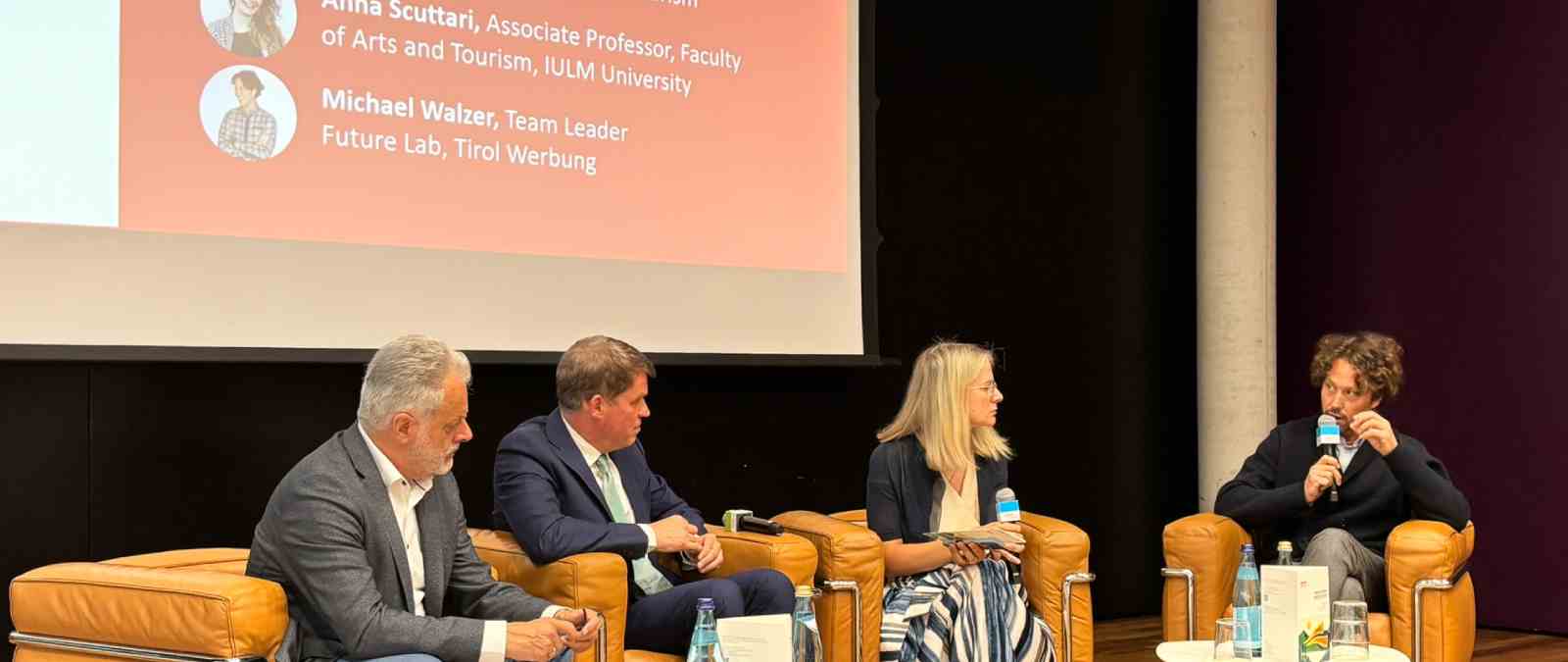
What does the future hold for tourism after 2030? This is one of the questions addressed by Anna Scuttari, professor of Tourism Data Analysis at IULM University, as part of the Futures Summit South Tyrol 2026, an international event dedicated to long-term challenges and transformations, which took place on June 11 and 12, with a contribution from the Director of the Sustainable Tourism Section at UN World Tourism Organization.
According to Scuttari, the tourism sector today continues to be driven primarily by economic growth and efficiency, while local communities, workers, and the environment often remain on the margins of decision-making processes.
“For years, the success of destinations has been measured primarily through indicators such as arrivals and overnight stays. Today, it is necessary to supplement these parameters with new metrics capable of assessing the well-being of communities, the quality of life of residents, and the ability of regions to regenerate over time,” the professor observes.
Among the transformations underway is a redefinition of the very concept of tourism. Phenomena such as local tourism, staycations, extended stays, and digital nomadism are blurring the lines between travel, work, and daily life, fostering deeper connections with local areas.
“Transforming the current tourism model means creating the conditions for a stable exchange and transfer of expertise among innovators, giving rise to a true network of pioneers,” explains Scuttari. “At the same time, we must address the structural conditions that can facilitate change. For example, the rise of digital nomadism and the increase in flight costs are already driving a shift from traditional international tourism toward a different form of tourism—one centered on extended stays—that emphasizes sharing spaces and spending more time within a destination.”
Looking beyond the UN 2030 Agenda, Scuttari identifies two major challenges for the sector: the decarbonization of tourism activities and adaptation to climate change. In this scenario, the tourism of the future will need to evolve from a predominantly “extractive” model to a “regenerative” system, capable of generating not only economic value but also social and environmental value for the communities that host it.