THE Sustainability Impact Ratings 2026: IULM Among Italy’s Top Universities and in the Global Top 20 for Gender Equality
The 2026 edition of the THE Sustainability Impact Ratings once again confirms IULM's strong commitment to advancing the United Nations Sustainable Development Goals (SDGs) under the 2030 Agenda. In an increasingly competitive international landscape, the University has consolidated its global standing while achieving significant progress across several strategic areas.
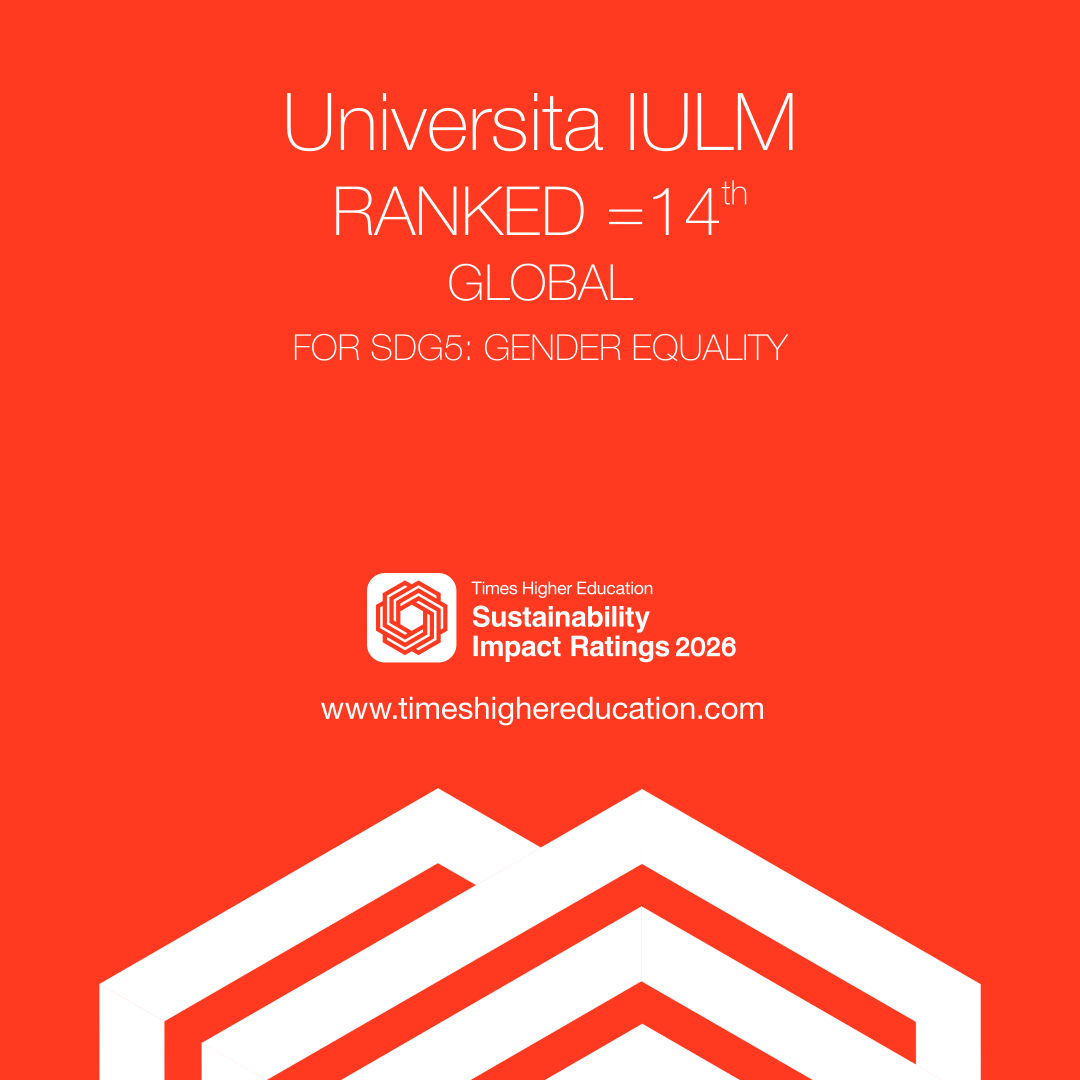
IULM’s most outstanding result comes in SDG 5 – Gender Equality, where the University ranks first in Europe and 14th worldwide out of 1095 participating institutions. This achievement further strengthens IULM’s position among the world's top 20 universities for gender equality and reflects the effectiveness of its policies promoting inclusion, equal opportunities and the empowerment of women. The evaluation particularly recognised the University's initiatives encouraging the participation of women—students, academic staff and professional services staff—in university life, together with policies fostering an equitable and inclusive environment.
Excellent performances were also achieved in SDG 4 – Quality Education, SDG 10 – Reduced Inequalities, and SDG 11 – Sustainable Cities and Communities, where IULM is ranked in the 101–200 band globally. For SDG 4, IULM ranks joint first in Italy, alongside the University of Bologna, the University of Foggia and the University of Padua. For SDG 11, the University is joint first in Italy with the University of Padua. The highest scores were awarded for IULM’s lifelong learning initiatives, anti-discrimination measures and sustainable mobility policies. In particular, the SDG 4 recognition reflects the University's extensive lifelong learning provision, offering continuous education and professional development opportunities to students, professionals and the wider community. For SDG 10, the assessment recognised IULM's comprehensive anti-discrimination framework—including its Gender Equality Plan, Code of Ethics, and the Rector's Delegate for Inclusion, Disability and Psychological Counselling—as well as concrete inclusion measures such as the Alias Career programme and the activities of the DiversaMENTE Office supporting students with disabilities and specific learning disorders. Under SDG 11, the University was recognised for its sustainable mobility initiatives, particularly its Home-to-Work Mobility Plan and the appointment of a Mobility Manager, both key measures in promoting more sustainable commuting and reducing the environmental impact of the campus.
Among the most significant improvements is SDG 17 – Partnerships for the Goals, where IULM advanced by more than 200 positions compared with the previous year, moving into the 201–300 band worldwide while also ranking first in Italy. This achievement reflects the University's extensive network of national and international partnerships, its commitment to building strategic collaborations in support of the Sustainable Development Goals, and the growing integration of sustainability across teaching and learning activities.
IULM also continues to perform strongly in SDG 16 – Peace, Justice and Strong Institutions, particularly in the areas of institutional governance and collaboration with public authorities. The University received the highest possible score for its governance measures promoting transparency, participation and accountability, as well as for its numerous initiatives developed in partnership with government institutions and public bodies.
In the overall THE Sustainability Impact Ratings 2026, which assess universities' overall contribution to the Sustainable Development Goals, IULM remains in the 201–300 global band, achieving an overall score of 81.7 out of 100.
These results confirm the strategic path that IULM has pursued over recent years to embed sustainability across its institutional activities, teaching, research and engagement with society. It is a commitment shared by the entire University community and one that will continue to guide IULM's future actions in contributing to a more sustainable, inclusive and responsible society.